Naming things – characters or worlds or, well, just stuff – can be a thorny problem for the writer of speculative fiction. Do I keep it simple or go off the deep end? Do I invent new words and languages or rely on the old ones?
Portmanteau words are a popular option – bolting together two or more everyday words to make an shiny new one. That durable SF building material plasteel springs to mind. If you’re not sure whether to go for plain or fancy, you can do both, which has the added advantage of adding texture to your worldbuilding. Hence Frank Herbert’s planet Arrakis (fancy), also known as Dune (plain), is inhabited by the monstrous Shai-Hulud, AKA Maker, commonly called the Sandworm.
You get the picture.
Fancy handles can get silly of course. I’ve encountered too many doorstop-sized fantasies populated with characters who go by names like Zzpan-ga-molzniuk or Jhsyn-hss. I hate that. Tolkien never made that mistake. He stuck mostly to names you can actually pronounce, like Bilbo Baggins, or Aragorn, or Sauron. Like Herbert, he used the many-languages trick to add richness and depth. For example, the wizard Gandalf is known variously as Mithrandir, Stormcrow and the White Rider.
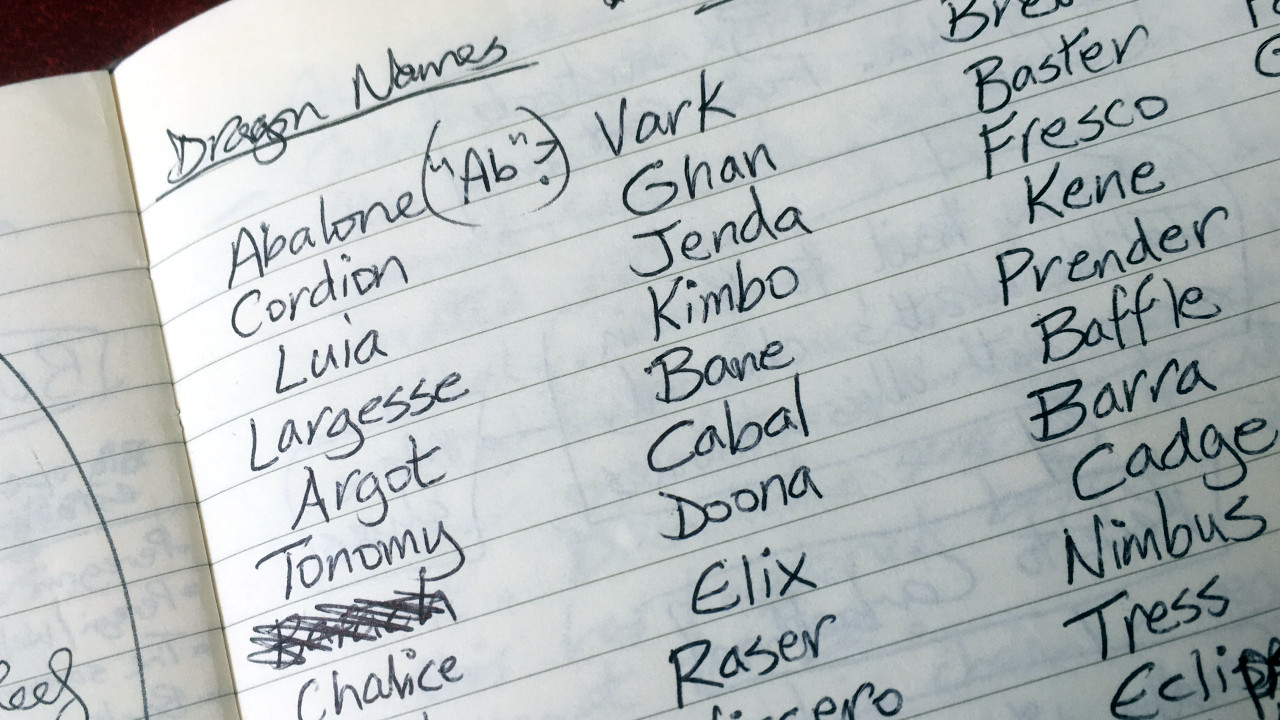
So what’s my approach? Whatever I say here, I’m sure to contradict it in the next piece of fiction I write but, by and large, I favour plain handles over fancy one. Names are like fishhooks, you see. Keep them sharp and simple and you stand a good chance of reeling in your reader. When I created the huge cast of dragons for Dragoncharm and its sequels, I used down-to-earth names like Fortune, Wood, Gossamer and Wraith. The image above shows the preliminary shortlist of names for my later fantasy novel The Dragons of Bloodrock.
If you’re very careful, you can avoid names altogether. The star of my String City series, which includes seven short stories and a novel, is a multidimensional detective whose name is never mentioned. My gumshoe’s anonymity started as a writer’s conceit in the first story, The Wooden Baby, and just continued from there. Both the stories and the novel are written in the first person, a choice that makes it a little easier to perform this high-wire stunt.
My detective does actually have a name, by the way. Who knows – maybe one day I’ll reveal it.
 Graham Edwards – Author & Journalist
>Aha, I've got the problem with names going on at the moment. I'm slowly but surely building up a fantasy world for an original fiction, and I've even got a couple of characters I'll want to put in it, but no names as yet. Like you said, they need to be sharp and simple, but what the initial inspiration for them is going to be, I don't know. All I'm going to say for now is, thank you for giving Fortune, Velvet, Scoff et. al. easy names – especially in a setting (dragon stories) where they could easily have had names that tied one's tongue in knots. ~ Satine