“What is story?”
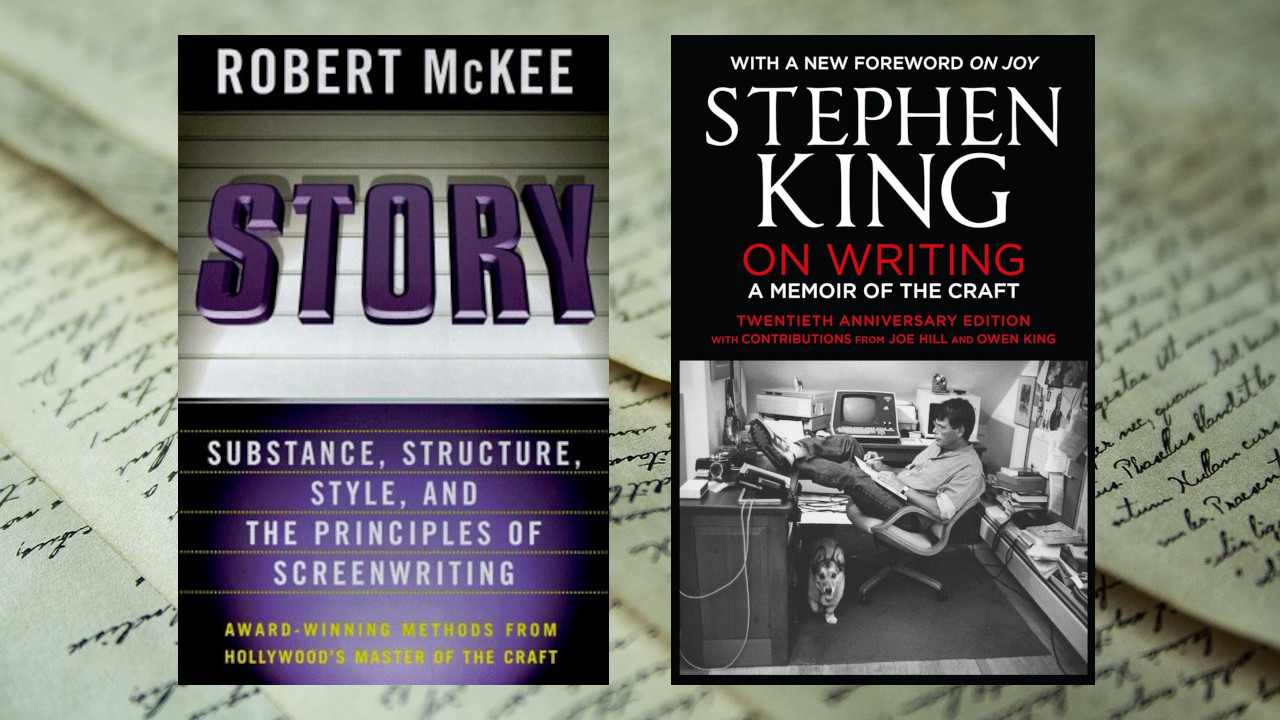
That’s one of the prickly questions tackled by screenwriting guru Robert McKee in his book Story: Substance, Structure, Style, and the Principles of Screenwriting, which does a remarkable job of both dissecting the craft of the storyteller, and inspiring the reader to stop shirking and get to work.
At the heart of the book is McKee’s core thinking about what constitutes the basic building block of story. He’s in no doubt that such a thing exists but, before revealing what it is, he makes a point of describing exactly what it is not.
According to McKee, the building block of story is not the individual scene, nor the paragraph of description, nor even the individual line of dialogue. All these are just delivery mechanisms. No, the stuff from which stories are made is what he describes as “the gap between expectation and result”.
As a definition, some might find this opaque. In fact, it’s entirely transparent. What McKee is talking about is how, at the end of a well-executed scene, a character faces challenges that weren’t present when he went in. He’s talking about twists. He’s talking about turns. Above all, he’s talking about surprise.
In this quote from Story, McKee elaborates on the idea that the key to narrative drive is thwarting the protagonist at every available turn:
The moment he takes this action, the objective realm of his inner life, personal relationships, or extra-personal world, or a combination of these, react in a way that’s more powerful or different than he expected. This reaction from his world blocks his desire, thwarting him and bending him further from his desire than he was before he took this action. Rather than evoking cooperation from his world, his action provokes forces of antagonism that open up the gap between his subjective expectation and the objective result.
This is the main thesis of McKee’s book. As ideas go, it’s one I can buy into. My own definition of a good story has always been something like “an experience that makes you feel different coming out to the way you did going in.” It’s kind of a reader-centric riff on McKee’s concept of “the gap”. Another mantra I’ve always carried with me is the rule that any scene that doesn’t advance the story is redundant, and must therefore be cut. I may have picked that one up from David Gerrold, but I can’t be sure. This rule is a kissing cousin to William Faulkner’s “kill your darlings”.
The notion of building blocks is central to McKee’s text, which contains a wealth of valuable insight into plot structure, and lays out in minute detail exactly how to go about writing a screenplay. First you map out acts, before gradually focusing down through individual scenes, until you settle into the nitty-gritty of action and dialogue.
Throughout the book, McKee illustrates his ideas with illuminating breakdowns of key scenes from films such as Chinatown and Casablanca, plus many more besides. He writes with an upbeat voice that I like a lot, peppering his text constantly with motivational prompts to “write something amazing”.
McKee’s ideas are in my head now, as I work on my latest writing project. Even though his target audience is the screenwriter – and he takes pains to point out that the job of the novelist is somewhat different – nevertheless, there’s enough common ground for Story: Substance, Structure, Style, and the Principles of Screenwriting to be useful to any writer, aspiring, professional or otherwise. I recommend it wholeheartedly.
And yet …
Sold as I am on McKee’s general philosophy, there’s one thing about his approach I don’t care for. It’s his emphasis on building stories from the ground up. It’s his suggestion that the storyteller is akin to a construction worker, arranging his narrative one brick at a time.
I don’t see it that way.
Confused by my reaction to Story: Substance, Structure, Style, and the Principles of Screenwriting, I turned to another excellent work on writing technique: Stephen King’s On Writing. Described by the author as being “about the language”, this small but perfectly-formed volume spends a lot more time talking about writing prose than it does about developing plot. The reason for that is simple.
King doesn’t trust plot.
According to King, while you certainly have to write prose one word at a time, you don’t build stories brick by brick. Narrative is created not by construction workers but by another breed of blue-collar operative: what King describes as “the guys in the basement”. These are guys you never meet. If you interrupted them in their work, they’d probably tear your head off. The best thing is to let them do their sweaty, inscrutable thing, and wait for them to send something up in the dumb waiter.
If you follow this idea to its natural conclusion, story becomes an emergent mystery. Story dreams. Story flows. The minute you try to erect a scaffold and mount your narrative on to it, you’ve placed your story in a straitjacket.
Now, King is primarily a writer of novels and short stories, working in a medium somewhat different to that of the screenwriter. Yet, I can’t help thinking that, to quote from one of McKee’s favourite films, the fundamental rules apply as time goes by.
In short, if you make me choose between McKee’s rigorous process of fabrication, and King’s mysterious narrative wellspring, well, I’m with King.
Don’t get me wrong. Writing stories isn’t all about devotion to a dark art. As both King and McKee point out, writing is rewriting (that one came from Ernest Hemingway). However unfettered your first draft may be, you’d better make damn sure you pull it into line before you let it see the light of day.
Maybe this is the place for McKee’s scaffolding. Maybe the structure comes later, when that clumsy first outpouring has shed enough of its raw volcanic heat so you can touch it, and start pulling it into shape. Bring in the construction workers too soon, and they’ll just get vaporised in the eruption. The guys in the basement, however, have protective clothing. Possibly scales.
Is story really all about “the gap between expectation and result”? I’m prepared to believe it is. But you can no more use that knowledge to write a story than you can use a sack of cement to design an opera house.
In Story: Substance, Structure, Style, and the Principles of Screenwriting, Robert McKee lists the raw materials that every writer needs. In On Writing, Stephen King describes the writer’s perfect toolbox.
Materials. Toolbox. Put them together, and I reckon you stand a chance of building something that will stand against the weather. If you work really hard, it may even look beautiful, too.
 Graham Edwards
Love this!