

What kind of visual effects were available to filmmakers in the 1930s?
In his article “In the Realm of Tricks and Illusions,” published in “The International Photographer” in June 1934, Earl Thiesen enlightens readers of the day with a shopping list of techniques in use at the time.
Thiesen, a lecturer in cinematography at USC and honorary curator in the Los Angeles Museum’s motion picture department, also remarks on prevailing industry attitudes towards trick photography. Even in 1934, it seems, the work of the “trickmen” – those old-time practitioners of the craft we now call “visual effects” – often went without credit. In a modern era where big studios blindly promote “practical effects” in favour of anything that smacks of “CG,” Thiesen’s observations seem particularly poignant:
“The trick and effect artists of the motion picture deserve far more credit than they are given. It is through them that the motion pictures have scenes that otherwise could never be brought to the screen. It is through them that an added realism is gained. They are the people of the motion picture whose results are seen on the screen, but who never are given credit. That is because of the fact that the motion picture producers are selling romance, and credit to these men would detract from the realism of romance.”
Earl Thiesen’s Brief History of Trickmen
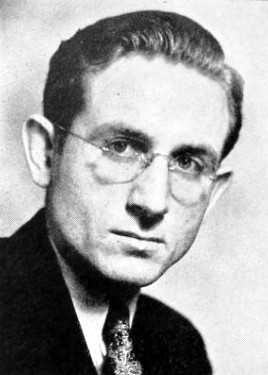
According to Earl Thiesen, the whole business of film trickery began with the artful deployment of double exposures and lap dissolves. He identifies William Kennedy Laurie Dickson as an early pioneer of the field.
Among other things, Dickson, who worked for Thomas Edison towards the end of the 19th century, developed the Kinetoscope (a revolutionary peephole movie viewer) and the Kinetograph (an early motion picture camera). Thiesen provides this brief description of “The Banjo Player,” an early film featuring double exposure effects by Dickson:
“‘The Banjo Player’ shows a man playing a banjo and several of his own heads watching him play. The heads are lying on a nearby table.”
In addition, Thiesen pays homage to French illusionist George Méliès, creator of early motion picture classics including “A Trip to the Moon:”
“His pictures almost entirely depended on trick photography … he photographed the picture frame by frame and by this method created such effects as the furniture and other inanimate objects moving about. One particularly notable effect used by Méliès was in ‘The Clown,’ which consisted of a clown building up a dummy piece by piece. When completed, the dummy suddenly came to life and had a very active fight with the clown.”
In an exhaustive round-up of patents granted through the early years of cinema, Thiesen analyses some of the key trick photography techniques of the day, starting with the use of masks or “mattes” to combine separate photographic elements into a single composition. He credits Frank D. Williams with perfecting the technique:
“The Williams’ process … was first used commercially about 1922. His first picture was the Famous Players Lasky picture, ‘Beyond the Rocks,’ starring Gloria Swanson, released on May 14, 1922. The Williams’ process consisted of photographing against a black background with a Bi-Pack that gave a transparent negative and a foreground action. In the Williams’ process, by using this mask made of the foreground action, he was able to add any desired background from any portion of the world. The foreground action, in the form of a matte, was then used as an intermediate step in introducing later, by process, the people in the foreground.”

From Glass Shots to Rear Projection
Next comes the “glass shot,” which combines live-action photography with scenic elements painted on glass:
“Walter L. Hall perfected this process for successful motion picture use. He began working on it during the filming of the D.W. Griffith ‘Intolerance,’ in 1916. In its first form, glass was not used. Instead the paintings were put on compo-board, then the outlines of the painting was cut away. This painted matte was set up in front of a camera and then in the background was built the remainder of the set for the action of the players. Of course, it was not as simple as that; to make a glass or a matte shot of this kind requires artistic skill and particular ability in lining up the perspective of the foreground picture with that of the constructed set. Glass shots are used in practically every picture today.”
The “Dunning process,” patented by Dodge and Carroll Dunning, with Roy Pomeroy, in 1927, was primarily used to enhance static studio sets with moving backgrounds. Here’s Thiesen’s description of its use in what today would be called a “car composite:”
“Suppose a picture called for a taxi going down a street in Paris. To get this shot, the studio would locate from a film library, a suitable motion picture of the Paris street. They would also locate a French taxi, which would be placed on a parallel in front of a special bluish colored background. The players would sit in the taxi, which would be lit with an amber yellow light. The camera then records both the background and the taxi in which the stars are sitting. By a combination of the amber light on the taxi and the blue background, the players and the taxi seem to be riding down the French street. Even though the taxi never moves, it is realistically blended in this French street scene.”

Thiesen states that the first commercial use of the Dunning process was in “Silver Comes Through,” a silent Western about rivalry in a cross-country horse race, starring popular cowboy actor Fred Thomson. He includes an amusing anecdote that speaks to the realism of a scene in which a horse leaps from a moving train (achieved, of course, through the aforementioned trickery):
“… when this picture was released, difficulties were encountered from the censors in one of the states. That was because Silver, Fred Thompson’s horse, was seen to be jumping off a traveling train. Of course, he had not jumped off the train, but had been made to seem to do so. When this was explained to the censors, they were appeased.”
The final techniques under discussion are miniatures and rear projection, as expertly deployed by Willis O’Brien in the seminal “King Kong:”
“In ‘King Kong’ the miniature ape, which was only 18 inches in height, was made to resemble a mammoth pre-historic creature of about 30 feet. The backgrounds in this picture were largely introduced by means of the glass matte or the projection process. Through a skillful use of perspective and optics in this picture, he made a miniature of about 18 inches seem to have a full size person, Fay Wray, in the miniature’s hand and the person seemed no larger than the ape’s thumb. Willis O’Brien also had birds flying through the sets, had miniature planes flying, and had this ape in combat with other prehistoric animals. They were all in miniature.”
Crazy as a Loon?
Thiesen concludes his round-up with the following whimsical comment:
“Throughout the history of the motion picture, this group of men have been called ‘crazy as a loon.’ They are always far ahead of themselves and they were always far ahead of the times.”
I wonder what modern-day visual effects professionals would think about being called crazy as a loon. I know a few who’d take offence, but plenty more who’d find it highly amusing.
What about you?
 Graham Edwards
One thought on “Movie Tricks of 1934”