
One of my earliest memories is of the Apollo 11 moon landing in 1969. I was four years old. I vividly recall watching grainy black-and-white pictures of Neil Armstrong exiting the Eagle lander through the stair bannisters. At even that young age, I understood something amazing was happening. I’ve wanted to go into space ever since.
Over forty years on, I guess I’m no closer to space. But Shuttle helped keep my dreams alive. In 1981, when I was sixteen, I watched with my heart in my mouth as Columbia launched for the first time from the Kennedy Space Centre. The reentry and landing was even more exciting: it looked like we really did have a reusable spacecraft on our hands at last.
Since then, the Shuttle programme has clocked up well over 100 missions – a remarkable achievement. Now that STS-135 is over, and Atlantis has landed for the final time, its work is done. I’m older – and probably not much wiser – but I do understand now that Shuttle was less a dream of the space age, more a clunky, compromised, white elephant.
Shuttle was the sole survivor of an integrated fleet of vessels proposed in 1969 by Nixon’s Space Task Group. The fleet could have included ships to take men to Mars in the 1980s, and nuclear shuttles to bring them home again. Lukewarm opinion polls, slashed budgets and a drastically changed political arena reduced this putative fleet to practically nothing (Apollo had served its true purpose by beating the Soviets to the moon and thus, in the minds of the politicians, had no logical successor).
That’s why the Shuttle programme never really made any sense. It was always designed to be a piece of a bigger puzzle. It survived the STG cull only because the US aerospace industry couldn’t afford to lose all those jobs. There were always going to be cheaper, more efficient ways of throwing things into orbit. Its design was dated before it even left the launch pad. It was a dead-end. And yet …
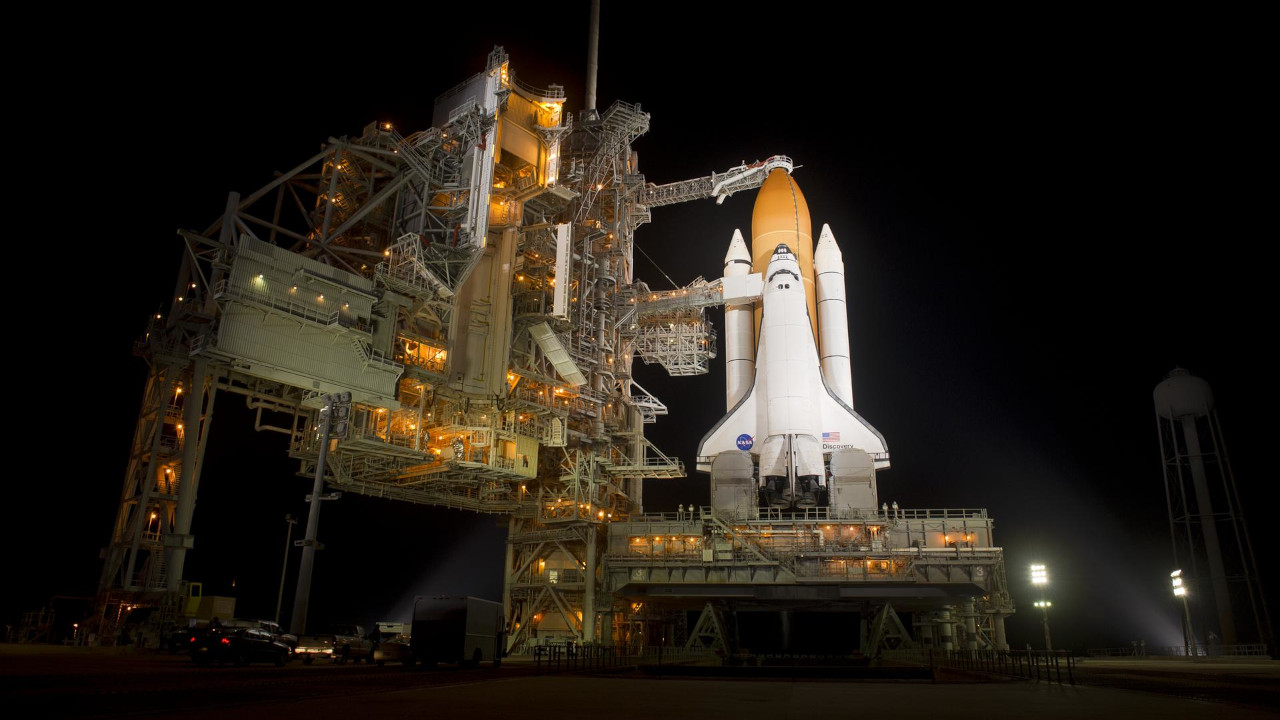
… and yet this big, beautiful white bird kept flying for thirty years. The launches never failed to excite me. The landings never failed to thrill. NASA’s Space Shuttle kept astronauts in space. The ship even looks like the Orion shuttle from 2001: A Space Odyssey, goddammit.
The middle-aged me knows the shortcomings of Shuttle, not least those which led to the tragic Challenger disaster of 1986. Inside, however, I’m still sixteen. I’m also four. When I let those versions of me rise to the surface, I know that Shuttle was a dream come true.
Much has been written about what might have been if the Nixon administration hadn’t backed the Space Shuttle. On this subject, I can recommend no book more highly than Voyage by Stephen Baxter. It’s a speculative novel positing an alternative timeline in which Kennedy survives the assassination attempt of 1963. Nixon still comes to power, but Kennedy’s influence sways his decision away from Shuttle, until he ultimately greenlights a mission to Mars, built on Apollo technology. Fiction it may be, but Baxter’s research is phenomenal, and his insights into NASA politics tell you everything you need to know about the knife edge on which the US space programme is balanced, all the time. It’s also a hell of a good story.
Rather like the story of Shuttle itself.
Image courtesy of NASA
 Graham Edwards – Author & Journalist
So glad you contributed to the community of farewells. Can we dare to ask “What’s Next?”
Thanks, Georgette. “What’s next?” is indeed the question that must be asked, over and over, until we’re back in the heavens again.