The wildwood lies at the heart of English folklore. There’s a good reason for that. Once upon a time, these isles were covered in forest practically from coast to coast. Tales of the Green Man, Jack-of-the-Green, Herne the Hunter and Robin Hood all sprang from that ancient wooded realm. Our oldest stories were first told in the shadow of the trees.
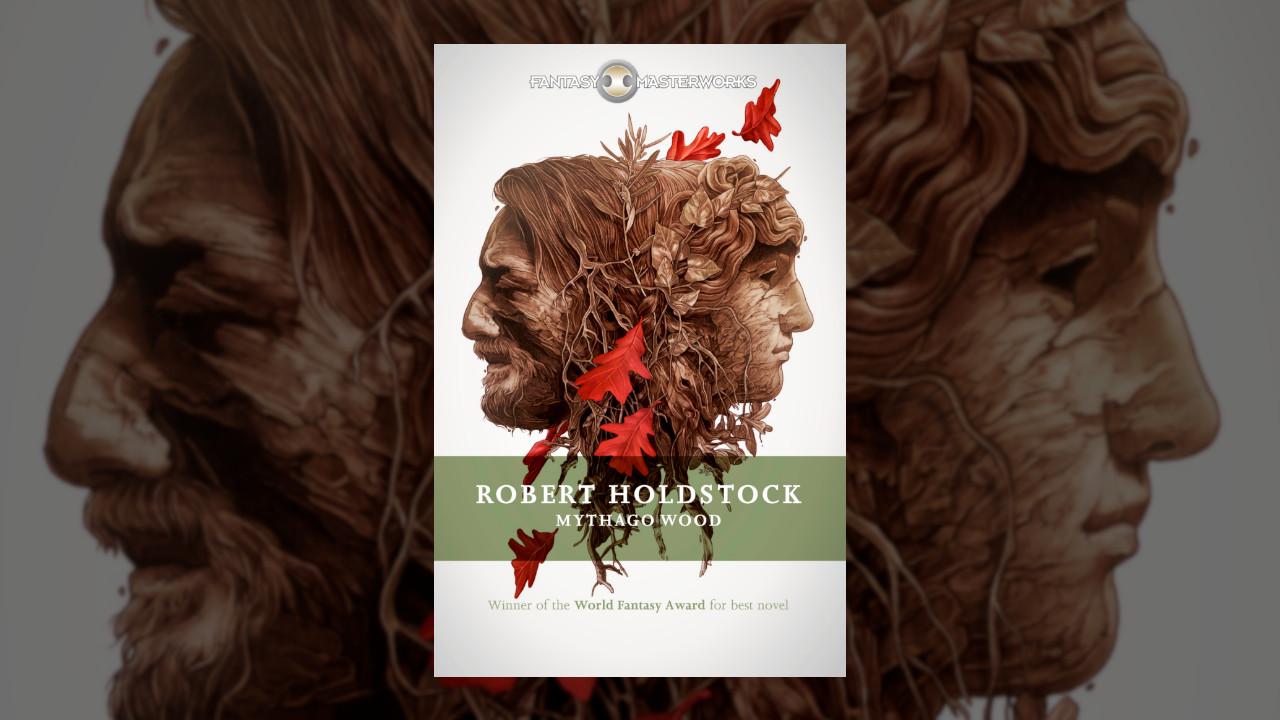
Of all the many writers who have explored the wildwood, few have delved deeper or with more success than Robert Holdstock. In his novel Mythago Wood, first published in 1984, he tells the story of Steven and Christian Huxley, two brother who venture into the mysterious Ryhope Wood in pursuit of their missing father. The old man, George Huxley, has been conducting research into the wood’s ability to create mysterious entities that he calls mythagos. A mythago is a physical manifestation of a mythological archetype drawn from the subconscious mind of someone who enters the wood. George’s investigations have drawn him deeper and deeper into the forest, and now he has vanished.
When Christian too disappears, Steven embarks on his own personal odyssey to find both missing men. He is accompanied by the strange and feral Guiwenneth, a pre-Celtic mythago created from his own mind. Along the way, he encounters characters from the entire span of human history: Roman soldiers and Bronze age tribesmen, Neolithic warriors and Arthurian knights. The further Steven travels, the bigger the wood becomes around him … and the more ancient become the myths he awakens.
There’s nothing I don’t adore about this book. The central concept is sublime. The story’s structure is supremely elegant, following Steven as it does from the first moment he discovers Christian analysing their father’s rambling notebooks, to the point where he has trekked for months through the tangled woods to in pursuit of the Urscumug, the most ancient and monstrous mythago of all, drawn directly from the subconscious of his own father. Holdstock’s prose is beautiful, earthy and accessible. He conjures the bosky atmosphere of the primal wildwood to the point where you can smell it, taste it, touch it. Yet still he remains laser-focused on the intimate human story playing out under the forest canopy.
Most of all, the author creates that most elusive of all things: a tale of magic that feels utterly real, a fantasy you entirely believe, an imaginary landscape you hope with all your heart that you might one day explore yourself.
Holdstock went on to write several more novels about Ryhope Wood. The first sequel was Lavondyss, in which the sister of one of the secondary characters from the first book makes strange wooden masks which, when she looks through them, allow her to access the mythical wildwood realm. In my opinion, its even better than Mythago Wood. The most recent, Avilion, was published in 2009, shortly before Holdstock’s untimely death. Avilion tells the story of Steven and Guiwenneth’s children (each of them is half-human, half-mythago) and their attempts to resolve their strange heritage. It, too, is a triumph.
 Graham Edwards