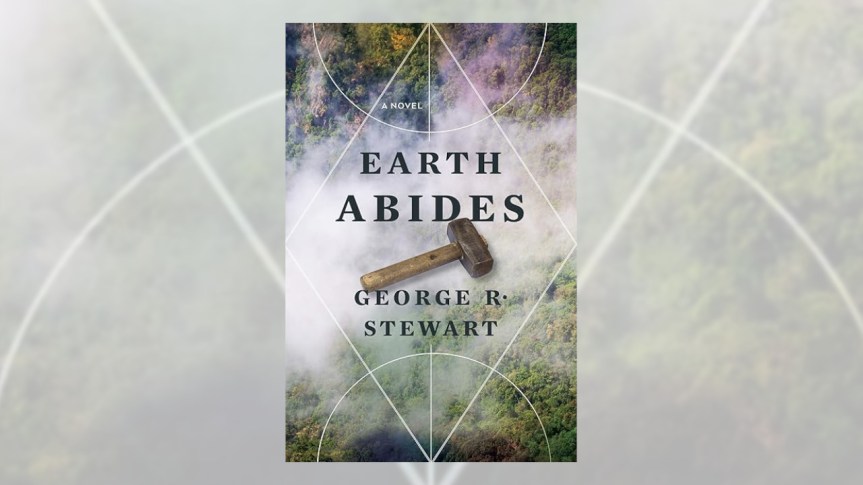
There are a few books I come back to over and over again. One of these is George R. Stewart's Earth Abides. If you haven't read it, I implore you to find a copy. It's probably the best post-apocalypse story you'll read. In the novel, Californian Isherwood Williams wakes from a snake-bite-induced delirium to discover … Continue reading “Earth Abides” by George R Stewart
Author: Graham Edwards
I'm the author of novels including "String City," "Talus and the Frozen King," "Dragoncharm" and "Stone & Sky." I used to be senior staff writer at Cinefex magazine and now edit The Illusion Almanac. If you offer me a cold beer, I won't say no.
From the Page to the Screen

On my bookshelf as a young kid, I had a book called Bambi by Felix Salten, another called The Hundred and One Dalmatians by Dodie Smith and The Adventures of Pinocchio by Carlo Collodi. I suspect my parents bought them for me when the Disney movies came out. However, these were 'real' paperback editions, not … Continue reading From the Page to the Screen
The Art of Deletion
"Kill your darlings" is a wise piece of writing advice most commonly attributed to Arthur Quiller-Couch. To put it another way, don't be afraid to delete stuff from your writing if it's adding nothing to the story. There's no doubt that deleting handwritten material is tremendously satisfying. You can do it in all kinds of … Continue reading The Art of Deletion
“Hide and Seek” — A Six Word Story

There's a claim that Ernest Hemingway was one of the first writers of flash fiction with a six-word story that goes: For sale. Baby shoes. Never worn. It's unlikely Hemingway actually wrote this, but you can't deny there's something seductive about the challenge of writing a story in just half a dozen words. Plenty of … Continue reading “Hide and Seek” — A Six Word Story
What’s in a Name?

Naming things – characters or worlds or, well, just stuff – can be a thorny problem for the writer of speculative fiction. Do I keep it simple or go off the deep end? Do I invent new words and languages or rely on the old ones? Portmanteau words are a popular option – bolting together … Continue reading What’s in a Name?
Tracking the Word Count

As techniques go it's a simple one. A no-brainer, you might say. Which makes it perfect for a disorganised clod like me. I'm talking about tracking the word count. I'm on a fairly tight schedule to ghostwrite a novel and deliver the 80,000-word manuscript by the beginning of September. The outline's clearly defined and, since … Continue reading Tracking the Word Count
Big Dumb Objects in Science Fiction

I recently re-read Arthur C Clarke's Rendezvous with Rama, having not picked it up since I was a teenager. What struck me – apart from the remarkable clarity of the prose and the clean straight lines of the narrative – was the geometry. Rama, the alien spacecraft featured in the novel, is an enormous cylinder. … Continue reading Big Dumb Objects in Science Fiction
Werewolves Rule

I once wrote a story called Dead Wolf in a Hat in which I fooled around with some of the standard werewolf conventions. In researching the story, I stumbled on a Bavarian variety called a Boxenwolf, whose ability to shapeshift was controlled by a special belt, and I got to wondering what other accessories or articles … Continue reading Werewolves Rule
“A Princess of Mars” by Edgar Rice Burroughs

I've travelled many times to Mars, courtesy of Bradbury and Dick and Baxter et al, but never to Barsoom. It's a shameful gap in my reading and one I'm now plugging by reading Edgar Rice Burroughs's A Princess of Mars. I'm about halfway through and it takes me right back to when I was a … Continue reading “A Princess of Mars” by Edgar Rice Burroughs
“Antarctica” by Kim Stanley Robinson
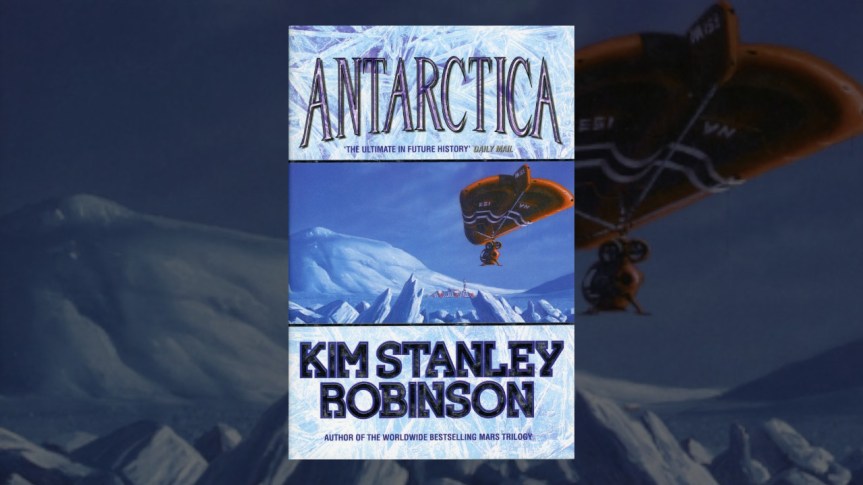
The protagonist of Kim Stanley Robinson's wonderful novel Antarctica is called X. It's a nickname actually, but I'm pretty sure his real name's never mentioned. Chapter one puts the book's cards on the table by saying, quite simply: "Call him X." Names have great power in fiction, and to reduce one's title character to a … Continue reading “Antarctica” by Kim Stanley Robinson
 Graham Edwards