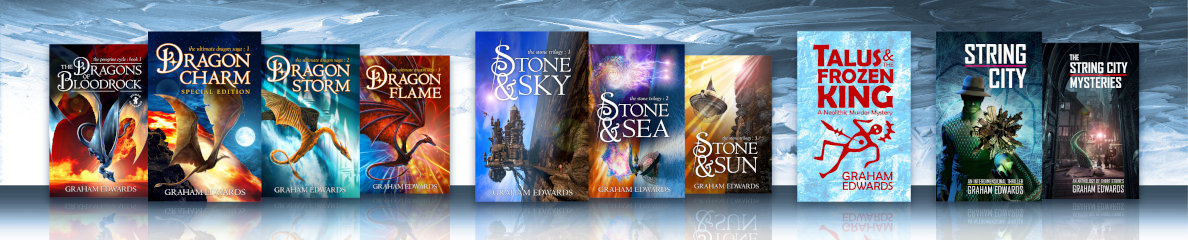

"Why do you write science fiction?" It's a fair question, only slightly complicated by the fact that, personally, I tend to write more fantasy than SF. However, if I go down that road, I run the risk of getting sidetracked into the endless debate about what the difference actually is between science fiction and fantasy, … Continue reading Ten Reasons to Write Science Fiction
Tag: Advice for Writers
Your Free Writer’s Monologue
Suffering from writer's block? Fed up with that nagging internal monologue that distracts you from the process of writing? Fear not! I've created the Writer's Monologue®, a patent-pending system guaranteed to keep your fingers on the keyboard and your mind on the job. To use the Writer's Monologue®, simply record yourself speaking aloud the script shown … Continue reading Your Free Writer’s Monologue
The Writing Radio
When you write stories, the ideas don't come from you; they come from the ether. You're not a writer; you're a radio. You might think you're making things up but you're not. You're listening to them as they come in over the airwaves. You're making sense of the signal and recording what you hear. You … Continue reading The Writing Radio
Wide Angle Writing

I hated history at school. Except for the drawing. I liked some of that, especially the diagrams of motte-and-bailey castles. I was utterly bored by the endless lists of English monarchs, the sleep-inducing accounts of meaningless wars, tedious revolutions and labour marches within which no one thing related to anything else, much less to my … Continue reading Wide Angle Writing
The Storyteller Eternal

Nobody knows exactly when the first stories were told. I'm going to stick my neck out and pitch in at 250,000 BC, but only because it's a nice round number and I don't have a time machine. It feels like a fair guess. The "Out of Africa" theory of human evolution suggests our early homo sapiens ancestors may … Continue reading The Storyteller Eternal
The Writer’s A-Z

If you've got as many questions as I have about the craft of creative writing, you'll know how important it is to try out new things. The more you learn, the more it seems there is to learn. Every day, as they say, is a school day. That's what this A-Z is all about. It's … Continue reading The Writer’s A-Z
The Five Stages of Editorial Feedback

According to psychiatrist Elisabeth Kübler-Ross, the five stages of grief are denial, anger, bargaining, depression, and acceptance. Most writers will recognise these as matching precisely the five stages of receiving editorial feedback on a manuscript. As in: Denial - "I refuse to believe that what I've written is anything other than an award-winning piece of … Continue reading The Five Stages of Editorial Feedback
The Research Funnel

I'm writing a novel set in Los Angeles in 1933. I've never been to Los Angeles. I've certainly never visited the year 1933. Clearly, research is required (rather more than I'd anticipated, actually, which just goes to show how blindly I plunged into the project). When you're writing a period piece, the details have to … Continue reading The Research Funnel
Every Character Needs a Spine
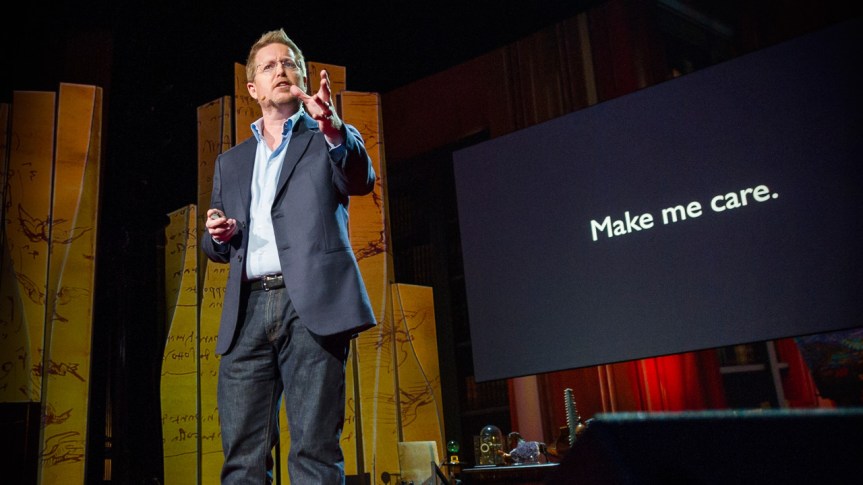
Earlier this year, film-maker Andrew Stanton gave an inspirational Ted Talk on storytelling. One quote in particular stuck with me, and it's this: "I took a seminar this year with an acting teacher named Judith Weston and I learned a key insight to character. She believed that all well-drawn characters have a spine. And the … Continue reading Every Character Needs a Spine
The Many Lives of a Writer – 5

Most people are like cats – they live not just one life, but many. Writers are no exception. Here's the introspective sprawl of my fifth writing life. Life 5 - Diversity So this is me, now, live and uncut, smack in the middle of my fifth writing life. In my past lives, I've written stories both short … Continue reading The Many Lives of a Writer – 5

